
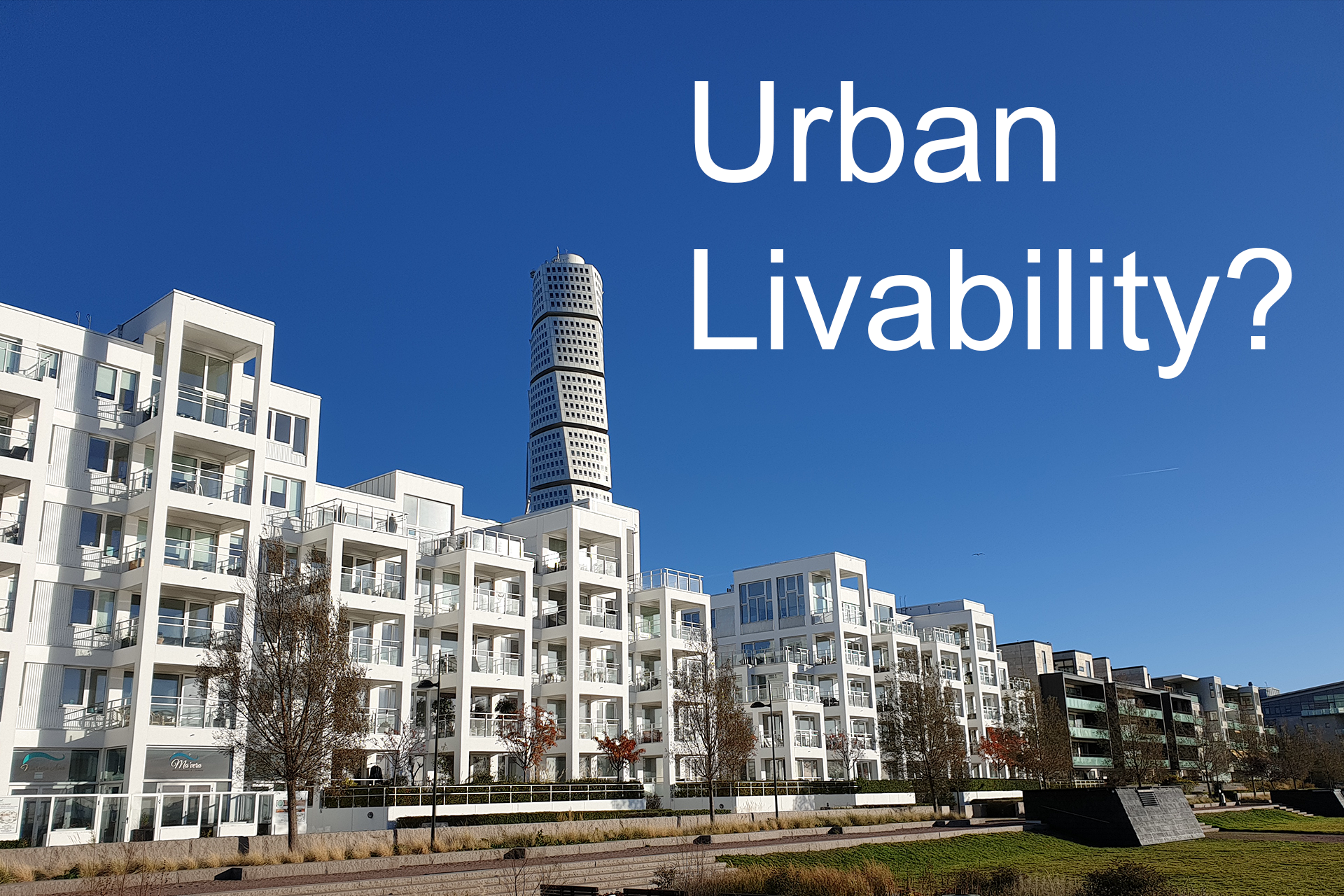
(日本語あり)I contributed to Kyoko Takahashi (a Ph.D. candidate at The University of Tokyo, Japan)’s journal article Identifying Context-Specific Categories for Visualizing Livability of Cities — A case study of Malmö that has been published by Challenges In Sustainability. The paper analyzes the importance of context-specific factors for the evaluation of urban livability based on the fieldwork findings in the City of Malmö, Sweden. The paper is an outcome of a research collaboration between Malmö University and The University of Tokyo through Global Fieldwork Exercises taken place in 2016. Read Online.
東京大学大学院博士課程後期課程在学中の高橋京子氏のジャーナル論文「Identifying Context-Specific Categories for Visualizing Livability of Cities – A case study of Malmö」(Challenges In Sustainability誌)に共同執筆者として貢献させて頂きました。本論文では、スウェーデンのマルメ市でのフィールドワークの結果をもとに、都市の居住性を評価するための文脈特異的な要素の重要性を分析しています。本論文は、2016年に実施されたグローバル・フィールドワーク演習を通じたマルメ大学と東京大学との共同研究の成果です。論文の全文(英文)はこちらから読むことができます。
Abstract:
Livability is a concept being applied to cities, even though it is vague. Worldwide, there are several livable city ranking schemes in use, which compare the livability of cities by making use of standardized indicator sets. The research presented here recognizes, as a point of departure, that each city is unique, implying that comparisons of cities by standardized categories only does not adequately reflect the reality of each city. A qualitative approach to identify context-specific categories of livability is proposed and employed in the case of Malmo ̈ in Sweden. Through interviews, nine context-specific categories were identified and visualized. The findings of the study demonstrate that a qualitative approach enables a more in-depth description of livability categories because it can capture and illustrate relationships among the categories. An explicit awareness of such relationships may provide a more holistic perspective to city officials and planners as they aim to improve the livability of their cities. The study concludes that a qualitative approach in identifying context-specific categories can complement existing assessment schemes and allow a better grasp of livability challenges to cities.
論文抄録:
リバビリティ(居住性)は、漠然とした概念ではあるが、都市に適用されつつある概念である。世界的には、標準化された指標を用いて都市の住みやすさを比較する「住みやすい都市ランキング」がいくつか存在する。本研究では、各都市が独自のものであることを出発点として認識しており、標準化されたカテゴリーだけで比較することは、各都市の実態を十分に反映していないことを意味する。本研究では、スウェーデンのマルメ市を対象に、居住性の文脈に特化したカテゴリーを特定するための定性的なアプローチを提案した。インタビューを通して、9つの文脈に特化したカテゴリーが特定され、可視化された。本研究の結果、定性的なアプローチは、カテゴリー間の関係性を把握し、図示することができるため、居住性のカテゴリーをより詳細に説明することが可能であることが示された。このような関係性を明確に認識することで、都市の居住性を向上させようとする市職員や計画者に、より全体的な視点を提供することができるかもしれない。本研究では、文脈に応じたカテゴリーを特定するための定性的なアプローチは、既存の評価スキームを補完し、都市の居住性に関する課題をよりよく把握することを可能にすると結論づけている。